
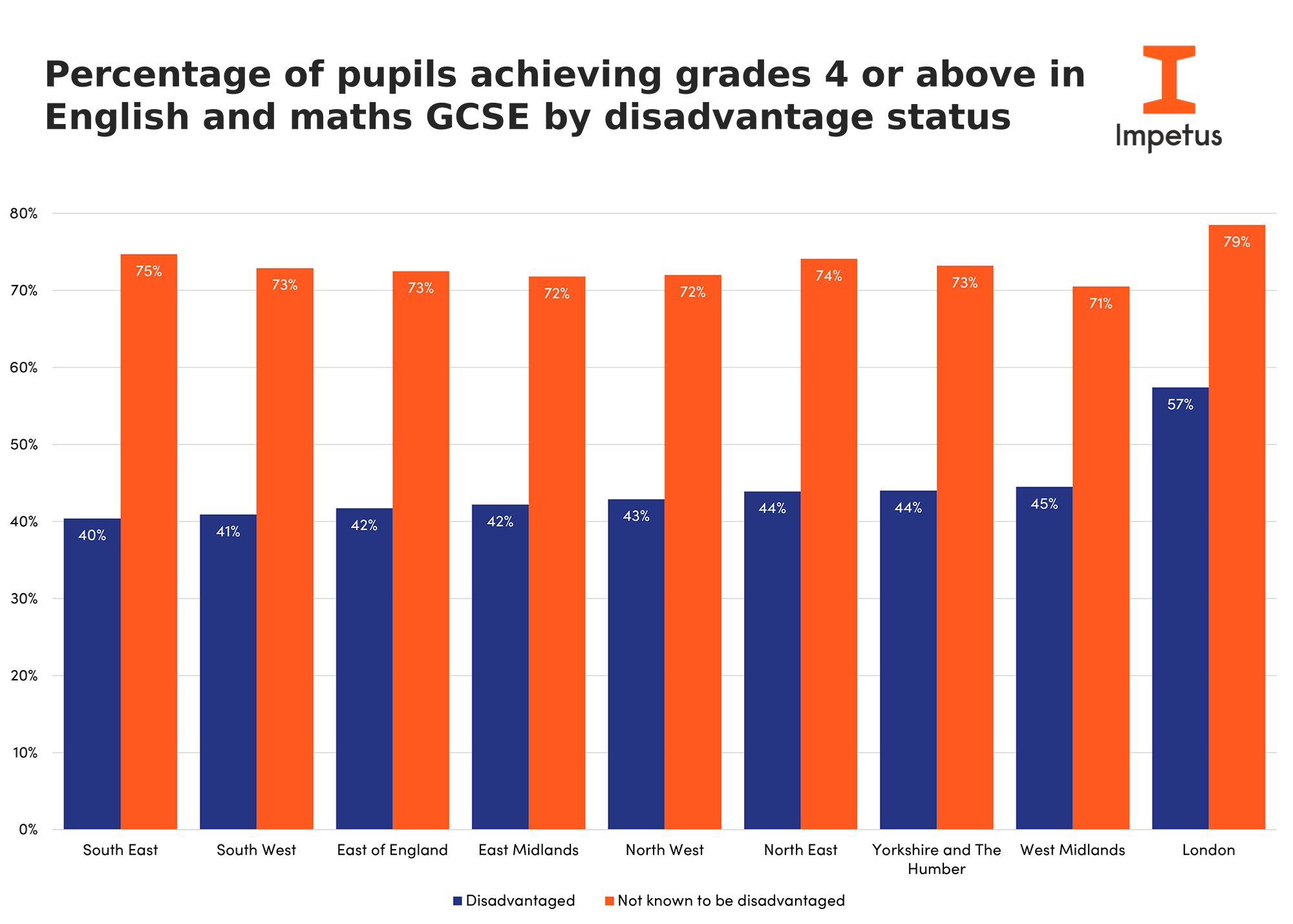
New Department for Education (DfE) data shows that pupils from low-income families in the South East are achieving the weakest GCSE English and maths results of any region in England, even as the area’s overall results remain among the strongest.
The DfE data released today shows that 66% of pupils in the South East achieved a grade 4 or above in GCSE English and maths in 2025/26, second only to London at 70.9%.
But among pupils eligible for free school meals (FSM), just 40.4% achieved grade 4 or above for these subjects, the lowest figure of any English region. For pupils not known to be eligible for FSM, the figure was 74.7% - exposing the largest regional attainment gap in England – at 34.3 percentage points, and highlighting the negative impact that poverty has on educational outcomes.
These qualifications matter - Impetus research found that young people without a pass in GCSE English and maths are twice as likely to be not in education, employment or training (NEET) as their peers with these qualifications.
Other findings include:
- Nationally, 45% of young people who were eligible for free school meals passed their GCSE English and maths exams, compared to 72.4% of their better off peers.
- Pupils eligible for free school meals were twice as likely as their peers to leave school without a standard pass in English and maths (55% vs 27.6%).
- The attainment gap has widened after COVID and has shown no improvement over the last three years, stubbornly remaining at 27.4 percentage points.
- London has the strongest outcomes for pupils from lower-income families and the narrowest gap at 21 percentage points.
- Outside of London, the West Midlands has the smallest attainment gap in the country at 26 percentage points.
- Students eligible for free school meals in the North of England (Yorkshire and the Humber, North East, North West) have a higher rate of passing GCSE English and maths compared to the South East - excluding London.
Tutoring is the single best-evidenced tool for closing the attainment gap, with an average impact of four months additional progress made over the course of a year. But despite this, schools and colleges are having to cut back on tutoring while affluent families are investing in private tutors like never before – threatening to widen the attainment gap further.
Action Tutoring uses volunteer tutors in schools in the South East to support pupils with experience of poverty to unlock their full potential. Last year, Action Tutoring pupils sitting their GCSEs were 13% more likely to pass GCSE maths and 10% more likely to pass English than disadvantaged peers nationally.
Sarah Pearson, Interim CEO of Action Tutoring, said:
“We know tutoring is the most effective way to close the attainment gap. Last year in the South East, 50 of our volunteer tutors supported 191 young people to catch-up in the critical period before their SATs and GCSEs so they don’t miss out on these essential gateway qualifications. We need to make sure that this support is an option for every child."
Sarah Pearson, Interim CEO, Action Tutoring
Susannah Hardyman, CEO of Impetus, said:
"The South East’s headline GCSE success tells only half the story. Behind the strong regional average are young people experiencing poverty who are being left further behind than anywhere else in the country.
“This should be a wake-up call. Poverty is not just a north-south issue: it is often deepest within regions, communities and even classrooms.
We know that young people without English and maths GCSEs are twice as likely to be NEET than their better off peers. Securing GCSE English and maths is a crucial protective factor for young people - with each step up the qualification ladder halving the chances of them becoming NEET.
We know tutoring can help pupils catch up, yet too often those who would benefit most are least able to access it. If we are serious about improving the life chances of young people, we must make sure they have the support they need to succeed.”
Susannah Hardyman MBE, CEO, Impetus
For general media enquiries, please contact Nicola Robbins and Emily Dalton at press@impetus.org.uk or call 07774 437 701.
Notes:
Full data on Key Stage 4 grades available here.
Impetus’ Youth Jobs Gap research found that although the greatest NEET risks are disproportionately concentrated in the North, both East Sussex and Brighton and Hove ranked among the 20 local authority areas in England where disadvantaged young people face the highest chance of becoming NEET. You can find out more using our Youth Jobs Gap digital tool or reading the Youth Jobs Gap report.
